If you or a loved one has suffered a brain injury as a result of an accident, one of the first questions you may ask is how much compensation a claim might be worth.
The answer is that brain injury compensation claims can vary very significantly. No two cases are the same. The amount of compensation awarded will depend on the seriousness of the injury, the effect it has had on the injured person’s life, and the care, treatment and support that may be needed in the future.
In many cases, a brain injury claim is about much more than compensation for the injury itself. It is also about securing access to rehabilitation, specialist therapies, financial stability, suitable accommodation, and long-term support where those needs arise.
This guide explains how brain injury compensation is assessed, the factors that influence the value of a claim, and why early advice from a specialist solicitor can make an important difference.
How is brain injury compensation calculated?
In personal injury claims, compensation is usually divided into two main categories: general damages and special damages.
General damages
General damages reflect the pain, suffering and loss of amenity caused by the injury itself.
When assessing general damages, courts in England and Wales often refer to the Judicial College Guidelines. These guidelines provide valuation brackets for different types of injury and are used as a tool when assessing the level of compensation that may be appropriate.
In broad terms, brain injuries are often considered by reference to severity, including:
- Very severe brain injury: significant disability requiring full-time care, with little or no meaningful response
- Moderately severe brain injury: serious disability with substantial dependence on others
- Moderate brain injury: cognitive or behavioural problems affecting work and daily life
- Minor brain injury: a shorter recovery period, although symptoms may still persist
As a broad indication, compensation for general damages alone can range from tens of thousands of pounds to several hundred thousand pounds, depending on the severity of the injury and its impact.
Special damages
Special damages cover financial losses caused by the injury, both past and future. In serious brain injury claims, these losses can be substantial and often form a very significant part of the overall value of the claim.
They may include:
- the cost of care and support workers
- case management and rehabilitation
- therapy and treatment
- loss of earnings and loss of future earning capacity
- loss of a professional career
- adapted or specialist accommodation
- aids and equipment
- transport costs
- ongoing medical treatment
- financial management, including Deputyship where appropriate
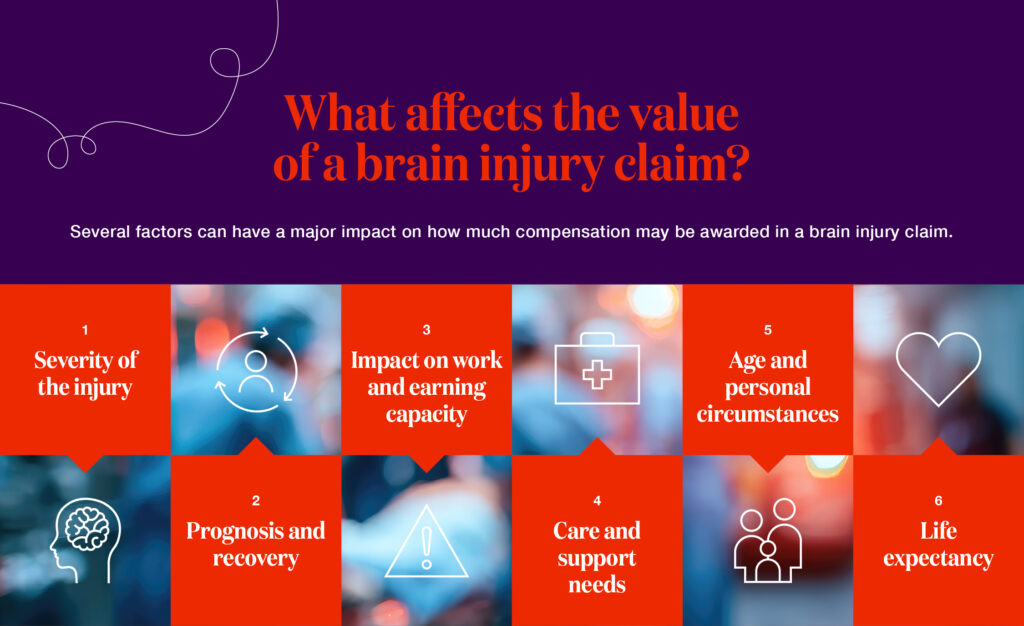
What affects the value of a brain injury claim?
Several factors can have a major impact on how much compensation may be awarded.
1. Severity of the injury
The extent of the cognitive, physical and behavioural impact will always be central to valuation. A more serious injury is likely to result in greater losses and more substantial future needs.
2. Prognosis and recovery
Medical evidence will help establish how the injury is likely to develop over time. Some people make a good recovery. Others are left with long-term or permanent symptoms that affect every aspect of daily life.
3. Impact on work and earning capacity
A brain injury can affect concentration, memory, communication, fatigue levels and emotional regulation, all of which may have a serious effect on a person’s ability to work. If the injured person cannot return to their previous role, has to reduce their hours, or cannot work at all, this can significantly increase the value of the claim.
4. Care and support needs
The level of care required is a key factor in serious brain injury claims. That may include professional care, support from family members, case management, assistance with daily living, or supervision to ensure safety.
5. Age and personal circumstances
Younger individuals with long-term needs often have higher-value claims because future losses may continue for many years. The court will look closely at the injured person’s circumstances, including their pre-accident life, work, and likely future needs.
6. Life expectancy
In some severe cases, a brain injury may affect life expectancy. This is a sensitive but important issue which can also affect how future losses are calculated.
Why medical evidence matters in brain injury compensation claims
Brain injury claims rely heavily on expert evidence. It is not enough to describe symptoms in general terms. The claim must be supported by detailed medical and expert assessment so that the full impact of the injury can be properly understood.
Depending on the circumstances, reports may be required from:
- neurologists
- neuropsychologists
- neuropsychiatrists
- neuro-rehabilitation specialists
- care experts
- occupational therapists
- speech and language therapists
- physiotherapists
- accommodation experts
- Court of Protection or Deputyship specialists, where relevant
This evidence helps build a clear picture of how the injury affects day-to-day life, employment, relationships, independence and future support needs.
Can you claim for rehabilitation and long-term support?
Yes. In many brain injury claims, rehabilitation is one of the most important issues from the outset.
A well-managed claim should not be focused only on the final settlement. It should also consider how to secure the right support at the right time, including:
- early access to rehabilitation
- ongoing therapy and treatment
- professional case management
- suitable care packages
- financial security for the future
Where liability is admitted, or where the evidence supports it, it may be possible to obtain interim payments before the claim concludes. These payments can help fund rehabilitation, treatment and support while the case is ongoing.
This can be particularly important in serious brain injury cases, where early intervention may have a significant effect on recovery and quality of life.
How long does a brain injury claim take?
Serious brain injury claims often take time to resolve, and in many cases that is necessary.
It is important to allow time to understand the injured person’s recovery, long-term prognosis and future needs. A claim may also require evidence from a number of different experts, particularly where there are significant care, accommodation or financial loss issues to assess.
For that reason, more serious claims can take several years to conclude. While that may feel like a long time, it is often essential to make sure the claim is properly valued and that long-term needs are not underestimated.
Why specialist legal advice matters
Brain injury claims are often complex, high-value and life-changing. They require careful investigation, detailed expert evidence and a clear understanding of the injured person’s current and future needs.
A specialist solicitor can help to ensure that the claim reflects not only the injury itself, but also the wider consequences for work, family life, independence, rehabilitation and financial security.
At Moore Barlow, the serious injury team works alongside medical professionals, rehabilitation providers and case managers to help injured people access support as early as possible, while also building claims that properly reflect long-term impact. Moore Barlow’s live brain injury and broader personal injury pages also emphasise rehabilitation, specialist support, and access to the firm’s serious injury team, including lawyers such as Tim Kirfield, Helen Goatley and Matthew Claxson.
Summing up
There is no fixed figure for brain injury compensation in the UK. Every case turns on its own facts, the severity of the injury, and the effect it has had on the injured person’s life.
What is clear, however, is that a brain injury claim is about much more than short-term compensation. It is about making sure that the injured person has access to the care, treatment, rehabilitation, support and financial security they may need for the future.
If you or a loved one has suffered a brain injury and would like to discuss your situation in confidence, taking early advice from a specialist solicitor can make a significant difference to both recovery and long-term outcomes.
How Moore Barlow can help
To discuss a potential brain injury claim, contact Moore Barlow’s personal injury team for a confidential, no-obligation conversation.
Frequently asked questions
How much compensation can you get for a brain injury in the UK?
There is no fixed amount. Compensation depends on the severity of the injury, the impact on day-to-day life, the level of care and support required, the effect on work and earning capacity, and the likely long-term prognosis.
What is included in a brain injury compensation claim?
A brain injury claim can include general damages for pain, suffering and loss of amenity, and special damages for financial losses such as care costs, treatment, rehabilitation, lost earnings, accommodation needs and future support.
How long does a brain injury claim take?
Serious brain injury claims often take several years. This is because it is important to obtain detailed expert evidence and understand the injured person’s long-term recovery and future needs before a final settlement is reached.
Can I claim future care costs after a brain injury?
Yes. If a brain injury has created ongoing care or support needs, those future costs can form an important part of the claim.
Can family-provided care be included in a brain injury claim?
Yes. Care provided by family members may be taken into account as part of the overall value of the claim, depending on the circumstances.
Can interim payments be secured in a brain injury claim?
In some cases, yes. Interim payments may be available before the final conclusion of the case to help fund rehabilitation, treatment, care and other urgent needs.
Why do I need a specialist brain injury solicitor?
Brain injury claims are often complex and can involve substantial future losses, expert medical evidence, rehabilitation issues and Court of Protection or Deputyship considerations. A specialist solicitor is better placed to build a claim that reflects the full long-term impact of the injury.
About Tim Kirfield
Tim Kirfield is a Senior Associate in Moore Barlow’s Major Trauma and Personal Injury team. He specialises in representing clients who have sustained life-changing and catastrophic injuries, including acquired brain injury and traumatic brain injury.