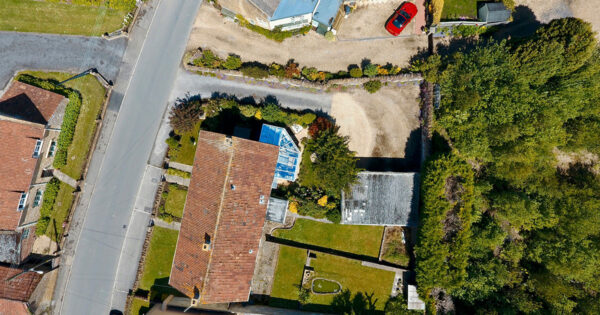
Mowing your way to ownership – Adverse possession and the case of the evicted garden gnome
In Dobson v Unsted [2026] UKUT 93 (LC), the Upper Tribunal has given practical guidance on adverse possession, arising from a dispute over a modest triangle of garden land in suburban Surrey. The case confirms an important point often misunderstood in practice, adverse possession is established by behaving as an owner would be expected to behave, not by dramatic acts of enclosure or confrontation.
In this case, mowing the grass, raking leaves and quietly maintaining a lawn for more than a decade were enough. A last‑minute garden gnome, deployed in an effort to reclaim ownership, was not sufficient to defeat a claim for adverse possession.
What is adverse possession?
Adverse possession is a legal process by which a person may be able to acquire ownership of land they have occupied without the owner’s permission for a set period of time, usually 10 or 12 years depending on whether the land is registered.
The person occupying the land does not buy it, but they must satisfy strict legal requirements before any claim can succeed.
Although adverse possession is often described as squatters’ rights, in practice it commonly arises in boundary disputes. For example, it may involve a neighbour using part of adjoining land, such as a garden or field, for many years without the legal owner realising.
The facts of the case
The dispute concerned a triangular strip of land measuring approximately 1 metre by 2.3 metres, located between a shared driveway and the legal boundary of neighbouring properties at 27 and 29 Pointers Hill, Dorking.
Although the land had formed part of number 27’s registered title since the two houses were split from a single plot in 1994, nobody at number 27 had used or maintained it for decades. By contrast, the owners of number 29 had treated the land as part of their front garden by mowing it, raking it, replacing topsoil, planting herbs, letting their children play on it, and later adding a small flower bed.
The owners of number 29 applied to be registered as owners of the land by adverse possession.
First‑tier tribunal decision
The First‑tier Tribunal (FTT) largely rejected the claim. It held that adverse possession began only in 2018, when the applicants planted a flower bed on the land. That left them five years short of the ten‑year period required under the Land Registration Act 2002. Routine garden maintenance, the FTT concluded, was merely “tidy and neighbourly” and did not amount to possession. Something more, such as fencing or a change of use, was required.
Upper tribunal: the context matters
On appeal, the Upper Tribunal (in a judgment by Elizabeth Cooke) overturned that decision. It held that the applicants and their predecessors had been in adverse possession since at least 2002.
The key legal principle was simple but decisive, the nature of the land determines what acts of possession are required.
If marshland can only sensibly be used for shooting, shooting is enough. If a corner of land is only suitable for composting and weeding, that may suffice. And if the land is an open lawn in a street of open‑plan front gardens, then mowing and routine maintenance are exactly what an occupying owner would do.
The Upper Tribunal rejected the idea that a claimant must change the nature of the land to establish adverse possession. Judge Cooke noted that fencing this plot would have looked “incongruous” in the context of open gardens, and that requiring such a step was wrong in law.
Looking at the whole picture
A crucial error made by the FTT was assessing each act of use in isolation. The Upper Tribunal stressed that possession must be assessed cumulatively.
On their own, the following acts would not have been decisive, children playing on the grass, wheeling a mower across it, placing a house number sign on the land or planting herbs.
Taken together, however, the picture was clear. The applicants and their predecessors were treating the land as their own, openly and consistently, while the legal owners did absolutely nothing with it.
The Tribunal put the point bluntly “People do not generally mow their neighbours’ grass without their agreement. Nor do they let their children play on it. Nor do they replace topsoil on it or plant herbs in it.”
What about the sign?
In 2016, the appellants placed a “29” house number sign on the disputed land. The FTT held that this did little to assist their claim, suggesting it was insufficiently visible and too closely associated with the right of way. The Upper Tribunal disagreed—not because the sign was decisive on its own, but because it formed part of the overall pattern of possession. As with mowing and planting, the sign contributed to the cumulative picture of ownership. This aligns with earlier case law in that signage is rarely conclusive, but it can support adverse possession when combined with consistent physical use of land.
Too little, too late
In May 2023, the respondents finally attempted to retake control by removing the applicants’ plants and installing a garden gnome on the disputed land. By then, it was over twenty years too late. Quiet, unchallenged use had done its work, and the gnome was of no effect and had to be removed.
Practical lessons for landowners
This case provides some clear warnings and takeaways:
- Know your boundaries. Even tiny parcels of land can matter, especially in larger estates or redevelopment sites.
- Use your land. Neglected land is vulnerable. If someone else is maintaining it and you are not, the clock may already be ticking.
- Act promptly. If a neighbour starts treating part of your land as their own, intervene early—before possession matures into legal title.
- Don’t rely on token gestures. Belated attempts to reclaim land are unlikely to succeed once adverse possession is complete.
How Moore Barlow can help
If you have a dispute concerning property or land, then strategic advice at the earliest stage from our Property Disputes team can help you resolve issues in the most cost-effective way. Whether you are a commercial landlord, developer, lender, commercial tenant, private individual or landowner, disputes can be costly both in terms of time and money.
Featured image – Image © 2026 Google